Apa itu SMILE dan SMILE pro?What are SMILE and SMILE pro?
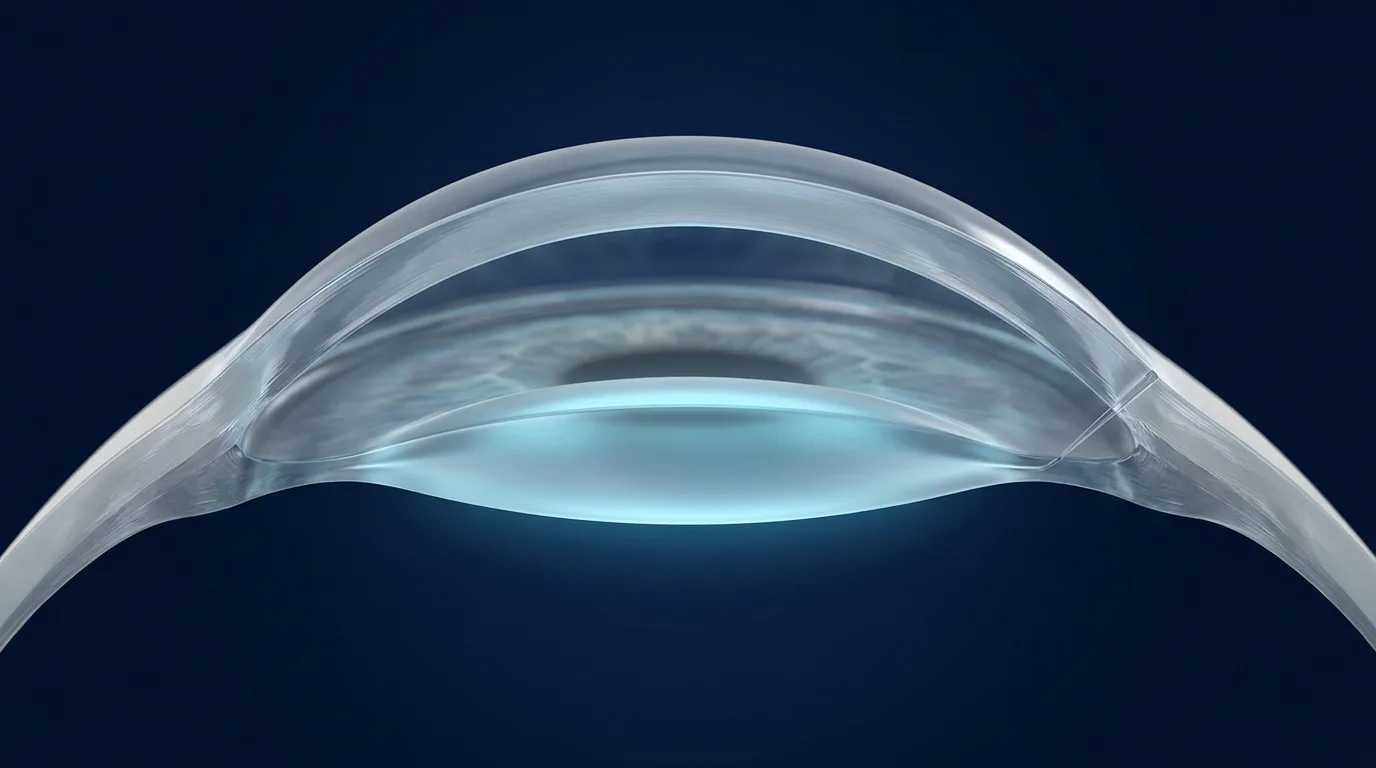
SMILE dan SMILE pro sama-sama prosedur ekstraksi lentikula. Laser femtosecond membentuk selapis jaringan yang sangat tipis di dalam kornea, lalu dokter mengeluarkannya lewat satu celah kecil di pinggir kornea. Permukaan kornea tidak pernah dibuka, jadi tidak ada flap sama sekali. SMILE pro adalah generasi terbaru dari prosedur yang sama dan berjalan di mesin laser ZEISS VISUMAX 800.
Both are lenticule extraction procedures: a femtosecond laser shapes an extremely thin disc of tissue inside the cornea, and that disc is then drawn out through a single small opening at the corneal rim. Because the surface is never lifted, there is no flap. SMILE pro is the newest generation of the same procedure, run on the ZEISS VISUMAX 800 platform.
Apa bedanya SMILE dengan LASIK?How is SMILE different from LASIK?
Bedanya ada pada flap. LASIK membuka lapisan atas kornea menjadi lembaran tipis berengsel, memperbaiki jaringan di bawahnya, lalu menutup lembaran itu kembali. SMILE tidak membuka lapisan atas sama sekali; dokter mengerjakan koreksinya dari dalam dan mengeluarkan hasilnya lewat celah kecil. Karena itu tidak ada flap yang bisa bergeser, dan saraf di permukaan kornea lebih sedikit yang terganggu. Meski begitu, LASIK tetap pilihan yang baik untuk banyak orang. Perbandingan lengkap ketiga metode ada di halaman LASIK JEC.
The core difference is the flap. LASIK lifts the top layer of the cornea into a thin hinged sheet, reshapes the tissue underneath, then lays the sheet back. SMILE never lifts that top layer; the correction is made from within and the result is removed through a small opening. The consequences: there is no flap that can shift, and fewer surface corneal nerves are disturbed. LASIK remains a good choice for many people — the full comparison of all three methods sits on the JEC LASIK page.
Apakah SMILE pro lebih baik daripada SMILE?Is SMILE pro better than SMILE?
SMILE pro memang lebih cepat, tapi belum tentu lebih baik untuk mata Anda. Cara kerja keduanya identik, dan untuk minus serta silinder dalam rentang wajar hasil akhirnya setara. SMILE pro merampungkan bagian lasernya jauh lebih singkat dan menambah bantuan menjaga sumbu mata, yang paling terasa manfaatnya pada silinder. Tetap hasil pemeriksaan Anda yang menentukan, bukan nama teknologinya.
Faster, not automatically better for your eyes. The mechanism is identical, and for short-sightedness and astigmatism within a reasonable range the results are comparable. SMILE pro completes the laser step in far less time and adds assistance in holding the eye on axis, which benefits astigmatism most. What decides your treatment is your examination, not the name of the technology.
Di lokasi JEC mana SMILE dan SMILE pro tersedia?Which JEC sites offer SMILE and SMILE pro?
SMILE pro ada di RS Mata JEC @ Kedoya (Jakarta Barat) dan RS Mata JEC ORBITA @ Makassar. SMILE ada di RS Mata JEC CANDI @ Semarang, KUM JEC JAVA @ Surabaya, dan KUM JEC BALI @ Denpasar. Kalau kota Anda hanya punya salah satunya, tim kami bisa menjelaskan apakah teknologi itu tetap cocok untuk mata Anda, atau memang ada alasan untuk melirik lokasi lain.
SMILE pro is available at JEC @ Kedoya (West Jakarta) and JEC ORBITA @ Makassar. SMILE is available at JEC CANDI @ Semarang, JEC JAVA @ Surabaya, and JEC BALI @ Denpasar. If your city has only one of them, our team can explain whether it is still the right choice for your eyes, or whether there is a reason to consider another site.
Apakah prosedurnya sakit?Does the procedure hurt?
Sebelum tindakan, dokter membius mata Anda dengan obat tetes, bukan suntikan, dan Anda sadar penuh sepanjang prosesnya. Kebanyakan orang menggambarkannya sebagai rasa tertekan selama beberapa detik, bukan nyeri. Setelahnya mata bisa terasa berpasir atau berair selama beberapa jam. Kalau nyerinya justru bertambah setelah tindakan, itu tidak normal dan segera hubungi dokter Anda.
Your eyes are numbed with drops before treatment, not an injection, and you remain fully awake. Most people describe it as pressure for a few seconds rather than pain. Afterwards your eyes may feel gritty or watery for a few hours. Pain that increases after the procedure is not normal and should be reported to your surgeon straight away.
Berapa lama tindakannya?How long does the procedure take?
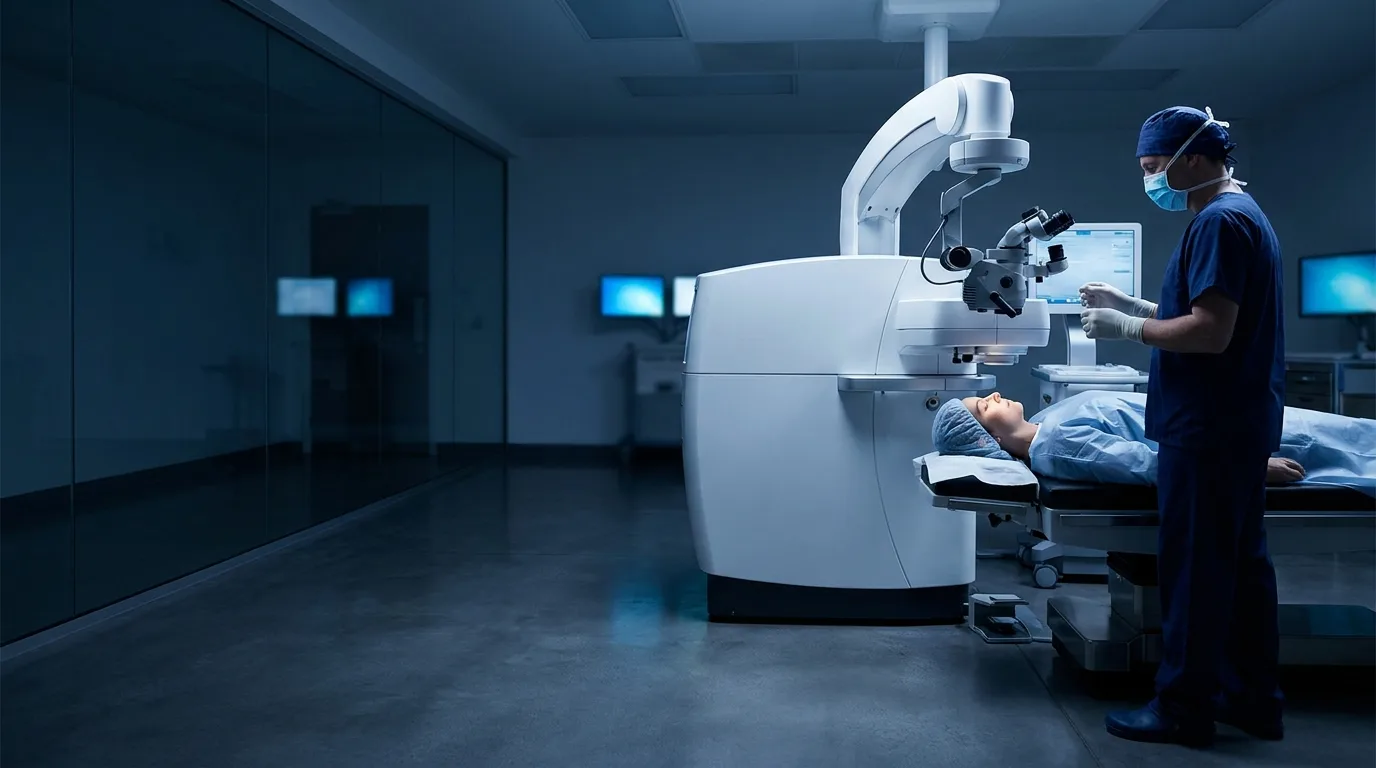
Bagian lasernya cuma hitungan detik per mata, sekitar 8 sampai 10 detik pada SMILE pro. Tapi waktu yang Anda habiskan di ruang tindakan jauh lebih panjang dari itu: persiapan, pemasangan penahan kelopak, docking, pengangkatan lentikula, sampai pemeriksaan akhir. Jadi luangkan waktu untuk keseluruhan kunjungan, bukan hanya untuk lasernya.
The laser step lasts seconds per eye — around 8 to 10 seconds with SMILE pro. But the time you spend in the treatment room is much longer than that: preparation, the lid holder, docking, lenticule removal, and a final check. Plan for the whole visit, not just the laser.
Kapan penglihatan saya membaik?When will my vision improve?
Banyak orang sudah melihat lebih jelas dalam satu sampai dua hari, dan penglihatan biasanya stabil dalam hitungan minggu. Tapi kecepatannya benar-benar berbeda tiap orang, dan sedikit kabur atau naik-turun di masa awal itu wajar. Justru untuk memantau hal seperti inilah jadwal kontrol Anda dibuat.
Many people see more clearly within one to two days, and vision generally settles over a few weeks. But the pace genuinely differs between people, and some blur or fluctuation early on is normal. Your follow-up schedule exists precisely to track this.
Apakah hasilnya permanen?Are the results permanent?
Perubahan bentuk kornea bersifat menetap. Tapi penuaan alami mata tetap berjalan: memasuki usia empat puluhan, hampir semua orang mulai kesulitan melihat dekat, dan ini terjadi pada orang yang pernah dilaser maupun yang tidak. Pada sebagian kecil orang, terutama yang minusnya sangat tinggi atau ukurannya belum stabil sebelum tindakan, ukuran bisa bergeser sedikit lagi.
The change to the corneal shape is lasting. What nobody can stop is the natural ageing of the eye: from around your forties, almost everyone begins to struggle with near vision, and that happens whether or not you have had laser treatment. In a small number of people — particularly with very high prescriptions or a prescription that was not stable beforehand — some regression can occur.
Apakah SMILE menyebabkan mata kering?Does SMILE cause dry eye?
Rasa kering sementara setelah tindakan laser apa pun memang umum, karena saraf di permukaan kornea butuh waktu untuk pulih. SMILE hanya membuat sayatan kecil dan tidak membuka flap, jadi saraf permukaan yang terganggu lebih sedikit dibanding prosedur berbasis flap. Meski begitu, ini bukan jaminan bebas mata kering. Kalau Anda sudah punya mata kering sebelum tindakan, dokter perlu menilai dan menanganinya lebih dulu.
Temporary dryness after any laser procedure is common, because surface corneal nerves need time to recover. Since SMILE makes only a small incision and lifts no flap, fewer surface nerves are disturbed than in flap-based procedures. That is not a guarantee against dry eye. If you already have dry eye before treatment, it needs to be assessed and managed first.
Apakah SMILE bisa untuk mata plus?Can SMILE treat long-sightedness?
Layanan SMILE dan SMILE pro di JEC memang ditujukan untuk mata minus dan silinder. Untuk mata plus dan untuk kesulitan melihat dekat karena usia, ada metode lain yang lebih cocok, dan pilihannya sangat bergantung pada kondisi mata Anda. Tanyakan saja lewat WhatsApp, nanti kami arahkan ke jalur yang tepat.
SMILE and SMILE pro at JEC are provided for short-sightedness and astigmatism. For long-sightedness and for age-related near-vision difficulty, other methods suit better — and that is a conversation to have with a doctor, because the choice depends heavily on your eyes. Ask us on WhatsApp and we will point you to the right path.
Kalau minus saya tinggi, apakah masih bisa?What if my prescription is very high?
Ada batasnya, dan batas itu tidak cuma soal angka minus. Dokter menghitung seberapa banyak jaringan kornea yang harus dilepas dibanding tebal kornea Anda. Dua orang dengan minus sama bisa mendapat jawaban berbeda karena kornea mereka berbeda. Kalau laser memang tidak memungkinkan, lensa tanam di dalam mata sering jadi jalur berikutnya, dan itu bisa dibahas di konsultasi yang sama.
There is a limit, and it is not simply about the number. What decides it is how much corneal tissue would need to be removed relative to how thick your cornea is. Two people with the same prescription can get different answers because their corneas differ. Where laser is not possible, an implantable lens inside the eye is often the route considered — and that can be discussed in the same consultation.
Apa yang harus disiapkan sebelum pemeriksaan?What should I prepare before the screening?
Lepas lensa kontak lunak minimal 14 hari dan lensa kontak keras minimal 3 bulan sebelum pemeriksaan. Lensa kontak mengubah bentuk kornea untuk sementara, jadi pengukuran yang diambil terlalu cepat bisa menyesatkan. Bawa juga resep kacamata terakhir dan daftar obat yang sedang Anda minum. Kalau memungkinkan, ajak pendamping, karena mata Anda akan ditetesi obat pelebar pupil.
Stop soft contact lenses at least 14 days and rigid lenses at least 3 months before the screening — contact lenses temporarily reshape the cornea, and measurements taken too soon can mislead. Bring your latest spectacle prescription and a list of any medication you take, and come with someone if you can, because your pupils will be dilated with drops.
Kapan saya bisa kembali bekerja dan berolahraga?When can I go back to work and sport?
Banyak orang kembali bekerja dalam satu sampai dua hari, apalagi untuk pekerjaan kantor. Olahraga ringan biasanya menyusul, sementara berenang dan olahraga kontak menunggu lebih lama. Angka pastinya datang dari dokter Anda, bukan dari halaman ini, karena yang jadi patokan adalah kondisi mata Anda saat kontrol.
Many people return to work within one to two days, particularly for desk-based work. Light exercise usually follows, while swimming and contact sport wait longer. The exact timings come from your surgeon, not from this page — because what decides them is how your eyes look at your check-ups, not other people's averages.
Berapa biaya SMILE dan SMILE pro di JEC?How much do SMILE and SMILE pro cost at JEC?
Biayanya bergantung pada teknologi yang dipakai, satu atau dua mata yang dikerjakan, hasil pemeriksaan Anda, dan apa saja yang sudah termasuk dalam paket di lokasi tersebut. Program cicilan tersedia dengan syarat dan ketentuan yang berlaku. Angka yang benar untuk Anda baru bisa diberikan setelah kondisi mata Anda diketahui, dan cara tercepat mendapatkannya adalah bertanya lewat WhatsApp JEC yang dijawab saat itu juga.
The cost depends on which technology is used, whether one or both eyes are treated, your screening results, and what the package covers at that site. Instalment programmes are available subject to the terms in force. The figure that is right for you can only be given once your eyes are understood — the quickest route is to ask on JEC's WhatsApp line, which answers immediately.
Apakah ditanggung BPJS atau asuransi?Is it covered by insurance?
BPJS Kesehatan tidak menanggung tindakan koreksi penglihatan, karena tindakan ini masuk kategori tidak esensial secara medis. Sebagian asuransi swasta dan tunjangan kantor menanggung sebagiannya, tapi ini sepenuhnya tergantung polis Anda. Jadi tanyakan dulu ke penyedia asuransi sebelum menjadwalkan tindakan.
Vision correction is not covered by Indonesia's national health insurance, as it is classed as not medically essential. Some private policies and employer benefits contribute part of the cost, but this depends entirely on your own cover. Check with your insurer directly before scheduling.